COMPLIANCE CHECKLIST
Fill in your name and email for Instant Access


Furnishing a rental property involves more than simply supplying furnishings; understanding how to furnish rental property helps to attract the type of tenant you are looking for, can minimise void periods and secure longer tenancies.

Getting the décor and furnishings right in a rental home will make the property more appealing to tenants. If tenants can imagine themselves living in the property, they are more likely to pay the full asking rent and your property will rent quicker.
If you want to achieve the highest possible rental price for your property in areas such as Peterborough, Northamptonshire or Kettering, we have some top furnishing tips to maximise its appeal to prospective tenants.
Here are our 16 tips for furnishing rental property, which can help to minimise refurbishment costs and reduce void periods, by quickly finding tenants who want to move into a well-furnished property:
Choose paint colours and furniture tones that are neutral, as this appeals to a wider range of décor tastes. Neutral colours also help the property to look brighter and lighter, with colours like soft greys and light beiges providing a warm and calming ambiance – you can explore various painting options here. Don’t choose statement wallpaper or bold pieces of furniture as this can turn off potentially good tenants because it is not to their taste.
The décor of a furnished property should complement the style of the furniture and tenants will be looking for a polished look, typically with artwork and mirrors. Unfurnished properties are a blank canvas for tenants who want to add their own touches, so there is less expectation that the property will feature stylish décor.
If you opt for renting your property out as part-furnished, you will need to provide all the basics such as:
For fully furnished rentals, you will need to provide all of the above items plus extras such as:
| Item | Fully Furnished | Part-Furnished |
|---|---|---|
| Sofa and living room seating | Included | Often included |
| Coffee table and side tables | Included | Sometimes included |
| TV stand or media unit | Included | Sometimes included |
| Dining table and chairs | Included | Often included |
| Beds and mattresses | Included | Often included |
| Bedside tables | Included | Sometimes included |
| Wardrobes or bedroom storage | Included | Often included, especially if fitted |
| Chest of drawers | Included | Sometimes included |
| Curtains or blinds | Included | Included |
| White goods (fridge-freezer, oven, hob) | Included | Included |
| Washing machine | Included | Included |
| Dishwasher | Often included | Sometimes included |
| Microwave, kettle, toaster | Often included | Rarely included |
| Lamps and decorative lighting | Included | Sometimes included |
| Artwork and decorative accessories | Often included | Rarely included |
| Mirrors | Included | Sometimes included |
When you furnish your property, you should be choosing the type of furniture that will suit your ideal tenant. For example, if you want to attract high-earning professionals, you should furnish with luxury items and consider your design choices much more carefully – you can explore some concepts and ideas here.
Young professionals often prefer furnished rentals, and if you are looking to attract corporate lets, these types of tenants will be looking for somewhere that is ready to move into straight away.
If you have bought property with the intention of renting to a group of students, you will be better choosing durable furniture.
There will also be some tenants such as families, who often prefer unfurnished properties because they already have their own furniture to bring. Unfurnished properties tend to attract long-term rentals as tenants do not want the upheaval of moving their belongings again after a short period.
| Tenant Type | Furnishing Preference | Key Considerations |
|---|---|---|
| Students and HMO tenants | Fully furnished | Needs durable, easy-to-clean furniture and a desk and chair for studying; higher wear and tear expected |
| Young professionals and corporate lets | Fully furnished, often higher spec | Expects a ready-to-move-in standard; may want kitchen utensils and quality finishes |
| Couples renting together for the first time | Part-furnished | Wants essentials provided but space to add their own items |
| Families | Unfurnished | Usually brings their own furniture; tends to seek longer-term tenancies |
Renting property to students is a very popular type of property investment, with HMOs and purpose-built student accommodation both generating good rental incomes for landlords.
These types of rentals will typically be furnished, and it is rare that a student will want to bring their own furniture.
The needs and lifestyles of students will be different to those of a family or professional couple, so they will need different types of furnishings.
A desk and chair for studying will be essential, and the furniture should be sturdy and easy to replace or clean, as there is likely to be a higher level of wear and tear.

When you are buying furniture, go for quality over quantity. Sturdy, long-lasting furniture will help you to save on replacement costs. A good option is wooden furniture that can be repainted before new tenants move in.
Kitchen furniture in an HMO will see plenty of usage, so make sure that it is made of durable materials and is well-constructed.
Think about how easy it will be to replace items before you buy them. Rather than choosing a company with a long wait for delivery, you could consider local suppliers with more flexible time slots and free delivery services.
However, using online suppliers will allow you to easily compare products and prices for items. Smaller items can often be delivered quickly via courier services, while for larger items such as mattresses, a local supplier may offer a faster delivery.
It is also worth bearing in mind that sticking to standard sizes will make it easier to replace items in future.

It might be tempting to buy a cheap carpet if you are worried about tenants damaging it but generally, it is better to buy a good quality carpet that is easy to clean. Also, choose a mid-tone colour as this is going to show up less stains.
Laminate flooring is a good choice in high-traffic areas such as halls and kitchens. Most people prefer to have carpets in bedrooms, as it is warmer than laminate.
Modern flooring alternatives to laminate include vinyl and LVT (Luxury Vinyl Tile), which are practical options for rental properties. LVT offers stylish, durable flooring that is water resistant and easy to clean.
Even if you are renting your property out as unfurnished, tenants will still expect basic furnishings such as window coverings. Curtains and light fittings are two of the only furnishing items that tenants will expect the landlord to provide for unfurnished properties.
Curtains that are washable are usually the best type of window covering, although blinds can help to make a room appear to be more spacious.
Velvet curtains will be difficult to clean, and you should avoid hanging darker colour window coverings in south-facing rooms, as they could fade with sun bleaching.
The lighting in a property is very important, as it will either make rooms look airy and spacious or have the opposite effect. For viewings, make sure that you open curtains and blinds fully to take advantage of the natural light.
When choosing bulbs, choose long-life ones that won’t need to be changed often, such as LED bulbs. Many tenants will be looking for energy efficient properties to save on energy bills, so providing smart bulbs and dimmers can improve tenant appeal without large costs.
All ceiling pendant light fittings should have a light shade, preferably that complements the colour scheme in the room – see what the best options for energy efficiency are here.
Fully furnished properties will typically include a wider range of living room furniture compared to part-furnished. Seating such as sofas or armchairs and a coffee table are essential for furnished properties.
You may want to choose to have a built-in wooden media unit and storage. Built-in units are usually more durable than stand-alone furniture and they can easily be repainted to give them a fresh new look.
The kitchen should include fully fitted kitchen cabinets and a fridge freezer, oven and hob are also essential, even for unfurnished properties. What you include in furnishings is up to you, but you may attract a higher calibre of tenant by including additional appliances such as washing machine, dishwasher and tumble dryer.
You can also decide whether to include a microwave, toaster and kettle. For furnished properties, a dining table and chairs are also standard, while corporate lets would also include kitchen utensils, cooking and baking equipment, and tableware.
Tenants will usually expect fitted kitchen units, an oven and a hob as a minimum, even in unfurnished rented properties.
Before you buy any larger items for your property, make sure you measure the space to check it will fit and consider that you don’t want to make a room look cramped by putting lots of large furniture in it.

Furniture for the bedrooms should include beds, bedside tables, drawers and wardrobe for storing clothes or another suitable storage space such as built-in wardrobes or shelves. However, built-in wardrobes can be a problem if tenants want to bring their own wardrobes and furniture, as there will be limited space available.
Divan beds are the more robust option compared to standard bed frames and when it comes to mattresses, it might be worth waiting to check with your tenant whether they have their own mattress they want to bring. If you buy a new mattress, go for a durable, high-quality mattress with a topper that will keep the bed protected from stains.
Although bed linen is not a requirement, it is definitely a good idea to put clean, ironed bed linen on beds to make the property look homely and comfortable. It is better to choose neutral coloured bedding for marketing photos, to make the room look more appealing and homely.
When you invest in a buy-to-let property, the two key objectives are:
When you are furnishing your property, keep these objectives in mind and consider the rules around what is tax deductible. For example, the costs for furnishing the property is not tax deductible but replacement items are.
Replacements of furniture, appliances and furnishing are tax deductible but must be like-for-like. One of the main cons of furnishing properties is that you will need to regularly repair or replace items, so that is another factor to consider.
Whilst it’s impossible to calculate the exact cost it would take to furnish a rental property, it is worth doing some calculations, so you don’t end up with a much bigger bill than expected.
Firstly, it depends on the type of tenant you are looking to attract. If you are renting an HMO to students or short-term renters, you can probably get away with the basics. But, if you are hoping to target someone looking for a luxury apartment, who is going to move in for a long time, then they may expect a bit more in order to make the place more homely.
These are some estimates of typical costs for fully furnishing properties:
1-2 bed: £5,000 – £8,000
3-4 bedroom: £6,000+
Student accommodation: £4,000 to £8,000
Luxury property: £12,000+
The costs for part-furnishing properties will cover white goods, sofas, beds and dining furniture, costing around £3,000 to £5,000 depending on the number of rooms.
Here’s a summary of potential costs for fully furnishing a property from scratch:
| Property Type | Furnishing Level | Estimated Cost |
|---|---|---|
| 1-2 bedroom | Fully furnished | £5,000 – £8,000 |
| 3-4 bedroom | Fully furnished | £6,000+ |
| Student accommodation | Fully furnished | £4,000 – £8,000 |
| Luxury property | Fully furnished | £12,000+ |
| Any size, varies by room count | Part-furnished | £3,000 – £5,000 |
Our advice is to write a list of what you need in each room, check online for the best prices and do your calculations in a spreadsheet. Most importantly, make sure you shop around. You may not want the cheapest options but make sure you get the best quality product for the amount you want to spend.
There is no harm in looking in charity shops for lower-priced furniture. There are several second-hand furniture and charity shops in the Northampton and Cambridgeshire areas where you may find a bargain.
A crucial thing to remember when buying furniture is your fire safety requirements as a landlord. The regulations include that all upholstered furniture and furnishings provided must meet fire safety standards, therefore any mattresses, sofas, chairs and cushions must have a fire-resistant label.
Your fire safety responsibilities are the same, whether you rent furnished or unfurnished and all upholstered items must display the fire safety labels.
Fire safety checklist for rental furniture
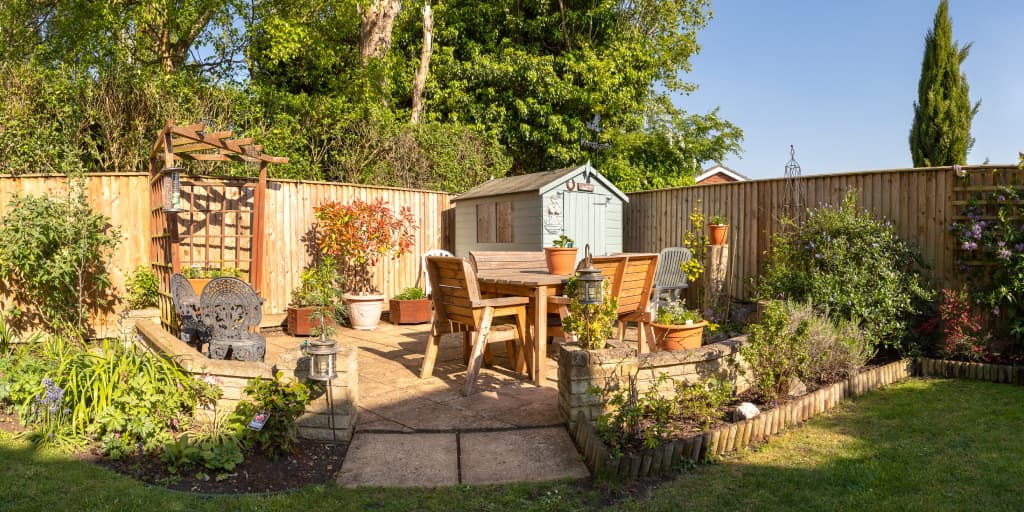
If there is an outdoor space to the property, you might also want to acquire some outdoor furniture, especially if you are looking to attract the type of tenants who will prioritise a property where they can enjoy the outdoor space.
Make sure the space is kept tidy and well-maintained, if there is maintenance required such as mowing grass or cutting hedges.
Your tenancy agreement should outline garden maintenance responsibilities, so that tenants understand that tasks such as mowing the grass is required. This also protects you if the garden is overgrown at the end of the tenancy and you can deduct costs from the deposit to cover gardening services.
Two important factors in protecting all the furniture and appliances you invest in, are taking out contents insurance and completing a comprehensive inventory.
Although contents insurance is not a legal requirement, if you are going to spend money on furniture and other items, it is highly recommended that you take out insurance to cover theft, damage etc – you can compare different quotes here.
The product most suitable to provide adequate protection is landlords insurance with contents cover and not standard contents insurance, as this does not cover rental properties.
Some insurance companies don’t provide content insurance for rental properties, as they see it as high risk, but you can find landlords insurance that includes contents cover for rental properties. Don’t run the risk of having a claim invalidated if you did not disclose that the insurance was for a rental property.
Take photos and videos to evidence the condition of furniture items and fittings. Be meticulous with your inventory to ensure you cover every detail and won’t end up in a dispute with a tenant about whether an item was included or what condition it was in.
Read our Property Inventory Guide for Landlords for more information.
You can remove the stress of this by letting your property through a reputable estate and letting agent, such as Progressive Lets. We will prepare a professional inventory and conduct an impartial check before the tenant moves in and after they leave.
Whilst the initial outlay of furnishing a property can be expensive, the benefits of renting out a furnished property are that they often attract higher rent and are generally more popular, spending less time on the market.
Renting out a property unfurnished can often be the cheaper option as you don’t have the initial costs involved. You also don’t need to worry about insuring the property’s contents if they don’t belong to you.
There are pros and cons to renting both furnished and unfurnished properties. Again, this often comes down to your circumstances and the type of tenant that you are looking to attract.
Families will often prefer unfurnished properties, while students and professionals often look for furnished properties. Young professionals and couples who are renting together for the first time tend to prefer part-furnished property.
There is a strong demand for furnished rental properties in Peterborough, partly due to the growing student population following the opening of ARU Peterborough. The area is also a popular location for young professionals commuting to London or Cambridge.
The initial cost of furnishing a let is treated as capital expenditure and cannot be deducted as a revenue expense. Replacement of Domestic Items Relief lets you claim tax relief when you replace furniture, appliances or furnishings on a like-for-like basis once the property is let. Keep receipts and a record of any item you dispose of to support a claim.
No, the deposit cap is the same whether a property is furnished, part-furnished or unfurnished. Under the Tenant Fees Act 2019, deposits in England are capped at five weeks’ rent where the annual rent is below £50,000, or six weeks’ rent above that threshold. Furnishing level has no bearing on this limit.
Tenants are responsible for damage caused beyond normal use, while landlords absorb the cost of fair wear and tear from everyday living. A worn sofa cushion after two years counts as wear and tear; a burn mark or a broken leg counts as damage. A clear, photographed inventory at check-in and check-out makes the two far easier to tell apart.
Yes, any upholstered second-hand item you supply, such as a sofa, armchair or cushions, still needs a valid fire-resistant label under the same regulations as new furniture. Charity shops can be a good source of cheaper furniture, but always check for the label before buying, since items without one shouldn’t be used in a let.
Update the inventory at the start of every new tenancy and again whenever you add, repair or replace furniture or appliances. It’s also worth refreshing photos at each check-in and check-out, even when the same tenant renews, since wear naturally changes over time. An out-of-date inventory makes deposit disputes much harder to resolve fairly.
You can store it for a future furnished let, sell it, or donate it to a charity shop if it’s still in good condition. Update your inventory and tenancy agreement to reflect the change, and check whether your contents cover needs adjusting now the items no longer belong in the property.
Furnished properties often command a higher rent and let more quickly, but the actual premium depends on local demand, property type and the tenant market in your area. In a location with strong student or young professional demand, the gap can be significant. A local rental valuation gives the clearest picture of what your specific property could achieve either way.
This depends heavily on furniture quality and how many tenants pass through, but sturdy, well-chosen pieces in a typical let often need replacing every five to ten years, with mattresses and sofas usually wearing out fastest. HMOs and student lets see much higher turnover and may need more frequent replacement of high-use items like kitchen furniture.
Progressive Lets are renowned local property experts specialising in lettings and property management in areas including Rushden or Spalding. Our lettings team can advise you on how to furnish rental property to maximise your rental income in a competitive rental market. Get in touch today for a no-obligation rental valuation.
Use our 63-point checklist to verify
that your rental property is compliant
Contact us, and we will be more than happy to help you.
"*" indicates required fields


Last month it was revealed that Coventry City Council was stepping up the hunt for unlicensed HMOs, following complaints from residents a...

Why use a sample landlord inventory? Quite simply, completing a robust inventory can avoid a dispute – and provide vital evidence if you ...

As autumn temperatures drop, a new terror lurks for landlords – that of damp and mould. Several factors can cause it, but








FREE Landlord Compliance Checklist
Being a landlord can be confusing. There are over 170 Acts & Regulations to consider, so, how do you know if you are compliant?
Download our Compliance Checklist Here